By Daneen Bergland
One of the great paradoxes of academic writing is that the narrower your topic, the more you’ll be able to say in your paper. Many students make the mistake of choosing a very broad topic and a vague thesis statement because they are afraid they’ll run out of things to say before they come to the required page length of the assignment. The problem with this tactic is that it prevents the writer from giving in-depth analysis. Or it causes the writer to veer around within the topic without a clear sense of direction. Picture your thesis as a specific destination, a place you’re trying to go to prove your point. The broad topic is a map of the entire country, when you’re really trying to find a street address; whereas, the narrow topic is the city map, full of details, landmarks, and clear directions to get where you need to go.
Narrowing your topic can seem difficult, especially if you’re working on a research paper. You may have found tons of information, all of it interesting and seemingly important. You’ve probably done a lot of work to find all your information and hate the thought of not including all of it in your paper. Take a deep breath and tell yourself whether or not the information you’ve found goes into the paper, it will still be useful as you write your essay and narrow your focus. After all, to the find street you’re looking for, you first need to know what state you’re in.
Here are a couple of ideas taken from Bruce Ballenger’s The Curious Researcher of ways to narrow your topic and find focus. These can be used both at the beginning of your research process, before you’ve started looking, or later in your process, after you’ve done some research and have a good working knowledge of your topic.
Narrow by time, place, story, or person
1. Time. Limit the time frame of your project. Instead of researching the entire Civil War, limit your search to the month or year when the most decisive battles occurred.
2. Place. Anchor a larger subject to a particular location. Instead of exploring “senioritis” at American high schools, research the phenomenon at a local high school.
3. Person. Use the particulars of a person to reveal the generalities about the group. Instead of writing about the homeless problem, write about a homeless man.
4. Story. Ground a larger story in the specifics of a “smaller” one. Don’t write about dream interpretation, write about a dream you had and use the theories to analyze it.
Narrow by relationship
Brainstorm a list of possible relationships between your topic and another.
For instance:
What is the relationship between global climate change and the Internet?
What is the relationship between global climate change and tourism in the U.S.?
What is the relationship between global climate change and advertising?
Once you’ve done some research and taken notes, a good way to narrow your focus is to stand back and look over what you’ve found. Look specifically for patterns or themes that have emerged. Look, too, for possible contradictions or paradoxes. These contradictions are often where you’ll find the most interesting ideas and best opportunities for your own in-depth analysis.
Showing posts with label analysis. Show all posts
Showing posts with label analysis. Show all posts
Friday, February 8, 2008

Thursday, May 17, 2007
Own the Quote, Don't Let the Quote Own You
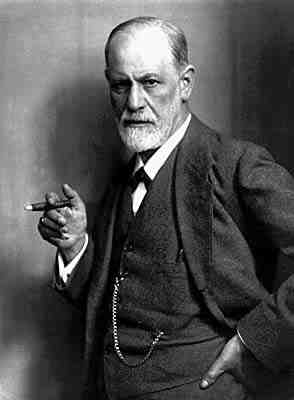
We're talking this week about effectively using quotes in research papers. Today, our suggestion is to make sure that rather than sprinkling quotes into your paper in isolated moments, you make sure to discuss any quote you use, so that the quote is serving your own argument, rather than the other way around.
Consider the following paragraph:
Sometimes things aren't so easy. "The problem with their plan," psychologist Jane Smith said, "is that they didn't account for the degree to which people are controlled by forces that we can neither prove the existence of nor agree on the function of. I'm talking, of course, about the unconscious, or the subconscious, depending on whether you're Freudian or Jungian about things, which makes a big difference, of course, if you study it closely, though Jung was a student of Freud's, but still, what I'm trying to impress upon you is that sometimes you just don't know" (312).That paragraph is completely controlled by a quote--the writer hasn't managed to contribute anything to it other than a brief introductory sentence, and it's unclear what the writer wants us to understand from that quote. An example of a writer taking control of the use of a quote might be:
Dogs might salivate at the sound of a bell, but strict behavioral psychology often fails to capture the somewhat more complex behavior of human beings. We know, of course, that people are hungry for food, but other motivations behind human behavior can be maddeningly inscrutable. As Jane Smith notes, strict behaviorists "didn't account for the degree to which people are controlled by forces that we can neither prove the existence of nor agree on the function of" (312). Regardless of whether one prefers Freudian, Jungian, or some other psychology, most people agree that they have experienced moments in which deeper forces seemed to be pushing them to choose one action over another--and those forces aren't as simple as responding to a dinner bell.All of that stuff--the quote, the paragraphs, etc.--was just made up off the top of our head. What we're trying to show, though, is that in the first example, a somewhat messy and not particularly focused quote had nevertheless been allowed to dominate a paragraph. In the second example, the quote has been trimmed to its useful point, and has been used within a context (and paragraph) controlled by the writer.
Monday, February 19, 2007
Analysis and Critical Thinking
Do you have assignments asking for a "Critical Review," "Critical Reading," or "Analysis Paper"? Confused about what these "academic" terms really mean and what the Prof. wants? The process of analysis is not so much simply summarizing the subject, but to evaluate what that material means.
You may be thinking,"How can I possibly evaluate something when I'm not an expert?" You don't have to be an expert. If you are in a class and the Prof. has asked you basically to "think" about the material you are reading, you already have all the skills you need to engage with the text. In other words, most of the time the Prof. is probably looking for how you think about the text. Terms like "critical," "analysis," "evaluate" simply mean to think about how something is working and why.
Some things to think about when approaching texts from an "analytical" or "critical" perspective.
• What do you think the text is trying to “say”? What seems to be the main idea?
• What are the points or ideas that the author uses to convey his/her main idea?
• How do these points work to show the main idea?
• Is there anything in the text that seems contradictory?
• If so, is this intentional? How does it possibly further the main idea?
• Are there any passages that stand out? How do these seem important to the main idea?
• What is the author’s point of view?
• What are other possible perceptions? (i.e. how does the text fit a context or a larger cultural perception? (If applicable))
• What is your perception? How is your view influenced by society and/or the text?
• Why does this subject seem important? Why or why not?
• How is this subject possibly relevant to other ideas you have been discussing in class?
You need not answer all of these questions, but they may be some things to think about if you get stuck. If all this seems too complicated, try this.
*What do you find interesting or important in the text?
*Why?
*Now explain the "why" through examples in the text.
Subscribe to:
Posts (Atom)

